
Healthcare workers and first responders are used to handling intense situations. Whether you’re a nurse, doctor, EMT, firefighter, or police officer, your job likely involves long hours, high pressure, and moments that most people never have to experience. Over time, that kind of stress can build up. 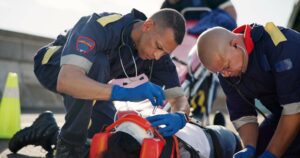
You might notice certain calls or cases stick with you. Maybe your mind replays things when you’re trying to relax, or you feel more on edge, shut down, or exhausted than you used to. This doesn’t mean you’re doing anything wrong. It usually means your brain hasn’t fully processed what you’ve been through.
That’s where Eye Movement Desensitization and Reprocessing (EMDR) can help.
What Is EMDR Therapy?
EMDR is a type of therapy that helps your brain process stressful or overwhelming experiences so they don’t keep affecting you in the same way.
When something intense happens—especially if it happens often—your brain doesn’t always get the chance to fully sort it out. Instead, the memory can feel “stuck,” which is why it still feels fresh or brings up strong emotions long after it’s over.
EMDR helps your brain finish that process.
During a session, you briefly focus on a memory while your therapist guides you through bilateral stimulation, or simple back-and-forth movements (like eye movements or tapping). This helps your brain reprocess the memory so it feels more like something in the past, instead of something you’re still in.
Why First Responders and Healthcare Workers Feel This More
In most jobs, stressful events happen once in a while. In your line of work, they can happen every shift. You may regularly deal with:
- Medical emergencies
- Life-or-death decisions
- Loss of patients or victims
- High-pressure environments
- Situations where there’s no perfect outcome
Even if you’re trained to handle it, your nervous system still takes it in. Over time, that can show up as:
- Trouble sleeping
- Feeling constantly on edge
- Emotional numbness
- Irritability or short temper
- Difficulty relaxing, even when you’re off work
- Burnout that doesn’t go away with time off
This is often a mix of stress, burnout, and unresolved experiences—not a personal failure.
How EMDR Helps with Burnout and Trauma
EMDR doesn’t just help you “cope better.” It helps change how those stressful experiences are stored in your brain.
Processing specific calls or events
Some moments stick more than others. EMDR helps your brain go back and process those memories so they stop feeling so intense. You’ll still remember what happened, but it won’t hit the same way or bring up the same, intense emotions.
Calming your nervous system
If you feel constantly keyed up or easily overwhelmed, that’s often your nervous system staying in high alert.
Working through guilt or “what ifs”
Many first responders and healthcare workers carry thoughts like:
- “I should have done more”
- “What if I made the wrong call?”
These kinds of thoughts can stick even when you did everything you could. EMDR helps your brain work through those experiences so they don’t keep looping in the same way.
As EMDR helps process past stress, your system can start to settle. Things that used to trigger a strong reaction may feel more manageable.
Changing long-term patterns
Over time, the job can create patterns like:
- Always pushing through exhaustion
- Feeling like you can’t slow down
- Putting your needs last
EMDR helps address where those patterns come from so they can start to shift naturally.
What an EMDR Session Is Like
If you’re used to fast-paced work, EMDR can actually feel more structured than traditional talk therapy.
A typical process includes:
- Choosing a memory or issue to work on
- Learning ways to stay grounded
- Using eye movements or tapping while focusing on the memory
- Letting your brain process and noticing what shifts
You don’t have to explain every detail of what happened. The focus is more on how your brain is holding onto the experience.
Common Concerns About EMDR
“I’m used to handling things myself.”
That makes sense. EMDR isn’t about taking that away—it’s about helping your brain process what it’s been carrying so you don’t have to keep managing it alone.
“I don’t have one big trauma.”
You don’t need one. A buildup of smaller, repeated stress can affect you just as much. EMDR works with that too.
“Will it bring everything back up?”
EMDR is done at a pace that feels manageable. You’ll learn ways to stay grounded before working on anything intense.
Benefits of EMDR Therapy
Many healthcare workers and first responders notice:
- Fewer intrusive memories
- Better sleep
- Feeling less reactive or on edge
- Less emotional numbness
- A clearer separation between work and personal life
One of the biggest changes is that past experiences start to feel like they’re actually in the past. EMDR might be worth exploring if:
- Certain calls or events won’t leave your mind

- You feel burned out in a way that rest hasn’t fixed
- You’re more irritable, numb, or overwhelmed than before
- You have trouble “turning off” after work
- You feel stuck, even after trying other approaches
It doesn’t mean you’re not strong enough. It usually means your brain hasn’t had the chance to fully process what it’s been through.
Final Thoughts
Working in healthcare or emergency response means you deal with a lot that most folks never see. You might be really good at your job and used to just getting through tough situations, but that doesn’t mean those experiences don’t stick with you. EMDR is a way to help with that—not by telling you to “handle it better” or pretend it didn’t happen, but by helping your brain sort through what you’ve been through so it doesn’t keep coming up in the same way. For a lot of folks, the change is pretty simple but important: things feel a bit lighter, reactions aren’t as intense, and it’s easier to actually relax when you’re off work. Reach out to the EMDR Center of Denver to schedule a free consultation to determine if EMDR might be a good fit for you.
More research on EMDR for healthcare workers and first responders:

Gessica Cross, LCSW
Gessica Cross has helped people find greater joy and healing from prior trauma, anxiety, and depression, as well as processing grief and life transitions. She is formally trained in EMDR and graduated with a Master’s in Social Work from the University of Illinois with honors. She moved to Colorado after completing a post-graduate fellowship in India in which she provided pro bono work among survivors of kidnapping, abduction, and human slavery. She has specialized in helping people recover from situations of trauma, depression, and anxiety for the last ten years. She is excited to work with you!